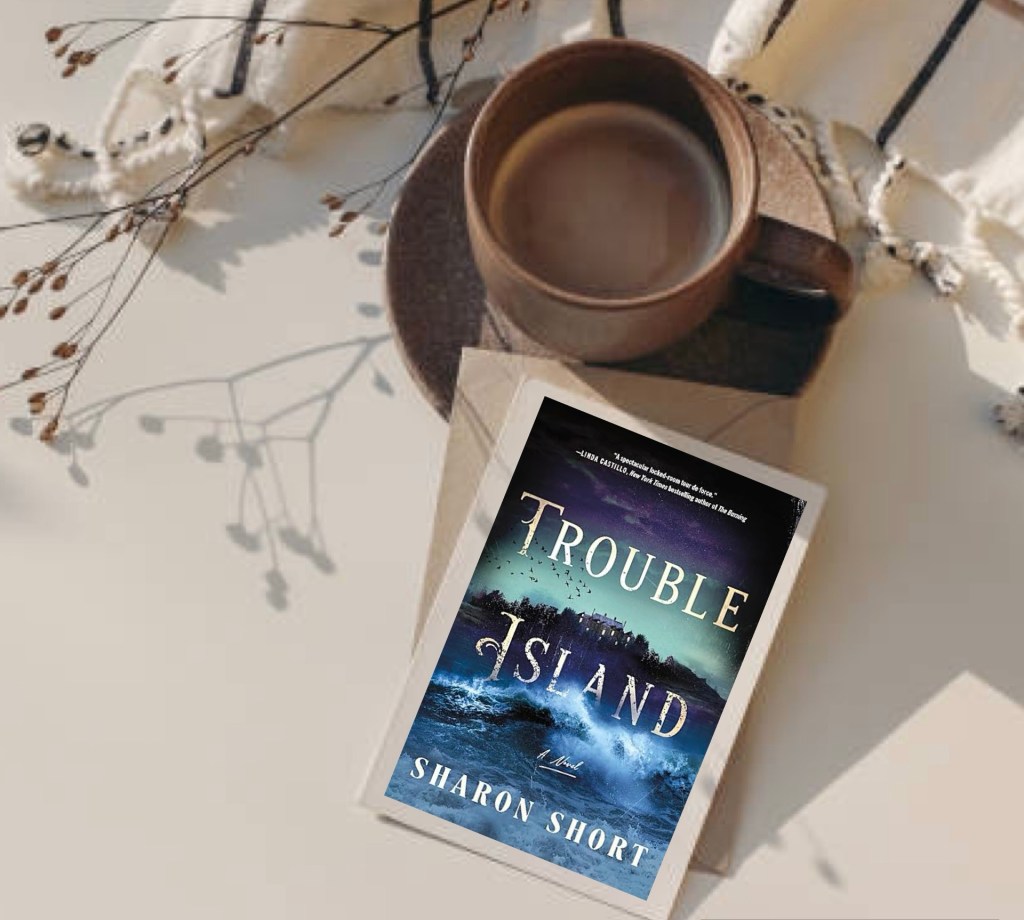
A gripping new novel inspired by a real place and events from the author’s family,Trouble Island is the standalone suspense debut from historical mystery writer Sharon Short.
Many miles from anywhere in the middle of Lake Erie, Trouble Island serves as a stop-off for gangsters as they run between America and Canada. The remote isle is also the permanent home to two women: Aurelia Escalante, who serves as a maid to Rosita, lady of the mansion and wife to the notorious prohibition gangster, Eddie McGee. In the freezing winter of 1932, the women anticipate the arrival of Eddie and his strange coterie: his right-hand man, a doctor, a cousin, a famous actor, and a rival gangster who Rosita believes murdered their only son.
Aurelia wants nothing more than to escape Trouble Island, but she is hiding a secret of her own. She is in fact not a maid, but a gangster’s wife in hiding, as she runs from the murder she committed five years ago. Her friend Rosita took her in under this guise, but it has become clear that Rosita wants to keep Aurelia right where she is.
Shortly after the group of criminals, celebrities, and scoundrels arrive, Rosita suddenly disappears. Aurelia plans her getaway, going to the shore to retrieve her box of hidden treasures, but instead finds Rosita’s body in the water. Someone has made sure Aurelia was the one to find her. An ice storm makes unexpected landfall, cutting Trouble Island off from both mainlands, and with more than one murderer among them.
Both a gripping locked room mystery, and a transporting, evocative portrait of a woman in crisis, Trouble Island marks the enthralling standalone suspense debut from Sharon Short, promising to be her breakout novel, inspired by a real island in Lake Erie, and true events from her own rich family history.
Review
When I started reading this story, I had no idea where it was going to lead me. And let me tell you, it led me on quite a journey.
Many miles from anywhere in the middle of Lake Erie, Trouble Island serves as a stop-off for gangsters as they run between America and Canada. The remote isle is also the permanent home to two women: Aurelia Escalante, who serves as a maid to Rosita, lady of the mansion and wife to the notorious prohibition gangster, Eddie McGee. In the freezing winter of 1932, the women anticipate the arrival of Eddie and his strange coterie: his right-hand man, a doctor, a cousin, a famous actor, and a rival gangster who Rosita believes murdered their only son.
I absolutely LOVED this setting. A remote island in the middle of Lake Erie is perfect for gangsters and murderers! And believe me…this book is full of both.
My heart broke for both Rosita and Aurelia, but for different reasons. But don’t let these two ladies fool you. They are not wimps! And as the story unfolds…you better look out!
Need a drama-filled tale with a great setting…THIS IS IT! Grab your copy today!
The Story of the Bee Gees pulls together every fascinating strand to tell the story of a group with the imagination of the Beatles, the pop craft of ABBA, the drama of Fleetwood Mac, and the emotional heft of the Beach Boys. Uniquely, the Bee Gees’s tale spans the entire modern pop era—they are the only group to have scored British top-ten singles in the ’60s, ’70s, ’80s, and ’90s—and includes world-conquering disco successes like “Stayin’ Alive” and “More Than a Woman”, both from the soundtrack of the hit film Saturday Night Fever.
But the Bee Gees’s extraordinary career was one of highs and lows. From a vicious but temporary split in 1969 to several unreleased albums, disastrous TV and film appearances, and a demoralizing cabaret season, the group weren’t always reveling in the glow of million-selling albums, private jets, and UNICEF concerts. Yet, even in the Gibbs’ darkest times, their music was rarely out of the charts, as sung by the likes of Al Green, Kenny Rogers and Dolly Parton, and Destiny’s Child.
Capturing the human story at the heart of the Bee Gees, this book is will delight hardcore fans with its details, while engaging casual pop listeners who simply want to know more about this important and enigmatic group.
Review
The Bee Gees’s extraordinary career was one of highs and lows. From a vicious but temporary split in 1969 to several unreleased albums, disastrous TV and film appearances, and a demoralizing cabaret season, the group weren’t always reveling in the glow of million-selling albums, private jets, and UNICEF concerts. Yet, even in the Gibbs’ darkest times, their music was rarely out of the charts, as sung by the likes of Al Green, Kenny Rogers and Dolly Parton, and Destiny’s Child.
Now I did fluctuate between 3 and 4 stars. Basically because I wanted more about their lives and less about the creativity of the music…I know, I know! They are a musical group but it just felt like it was missing something. I did settle on 4 stars because I did learn a great deal! Through many trials and tribulations…this group is a one that will not be forgotten!
I did love the list of songs at the front of each segment. Brought back so many memories. This list encompasses the top 10 songs for the time frame of the segment in their life story.
The narrator, Paul Fox, really did a good job. I enjoyed his cadence!
I received this audiobook from the publisher for a honest review.
Jenni L. Walsh captures the thrill of being on the court in a vivid and detailed portrayal of Alice Marble’s rise to sporting greatness, as well as her struggles to fulfill her dreams both on and off the court. Ace, Marvel, Spy is a smashing success!” –Billie Jean King, sports icon and equality champion
“All’s fair in love and war–and tennis!–in Jenni L. Walsh’s latest page-turning historical novel . . . Readers can’t help but be inspired by this unflinching portrayal of a true American icon.” –Kristy Woodson Harvey, New York Times Bestselling author of A Happier Life
Trailblazer, superstar, activist, and spy: Alice Marble is a true American icon.
Alice strives to have it all.
At seventeen, Alice Marble has no formal tennis skills and no coach. What she does have is an ability to hit the ball as hard as she can and a strong desire to prove herself. With steadfast determination and one sacrifice after another, Alice plays her heart out on the courts of the rich and famous, at national tournaments, and—the greatest of them all—at Wimbledon, rising to be one of the top-ranked players in the world.
But then her world falls apart.
With the outbreak of war with Germany, Alice’s tennis career and life come to a screeching halt, and for the first time, she is forced to confront who she is without tennis. As she seeks to understand her new place in the world and how she can aid in the war efforts, a telegram arrives with devastating news from overseas. Heartbroken and lost, she feels like she can only watch as the war wreaks havoc in every area of her life.
Until an unexpected invitation arrives.
Alice is given the chance to fight back when the US Army sends her a request: Under the guise of playing in tennis exhibition games in Switzerland, she would be a spy for them. Alice aches for nothing more than to avenge what the war has taken from her and to prove herself against this new opponent. But what awaits her might be her greatest challenge yet.
From her start as a promising athlete with worn-out shoes to her status as a glamorous international star, Alice Marble’s determination to control her own life and destiny fuels a story of achievement, discipline, loss, and love.
Jenni L. Walsh’s Ace, Marvel, Spy brilliantly showcases the life of Alice Marble, a real-life tennis sensation known for her extraordinary talent and indomitable spirit. This fast-paced and action-packed historical novel spans multiple international settings and is enhanced by discussion questions that prompt readers to reflect on Alice’s challenges and triumphs, making it an ideal choice for book clubs.
Review
I love a book based on a real person. And y’all, I had no idea that this woman existed. And what a life she led!
Alice is raised very poor. But she has a talent. She is extremely talented in tennis. She is strong and fierce on the court! When the war breaks out and tennis is at a standstill, Alice ends up as a spy…but there is a lot of life in between you do not want to miss.
This book is fascinating because Alice is one unique lady. I love her strength and her intelligence. She is an Ace tennis player, then she is a Marvel because she comes back from several traumas and illnesses, then she is a Spy. I love the way her life unfolded and Jenni L. Walsh expertly led me through all the twists and turns.
I am going to do more research on Alice. I feel like there is more to learn.
This novel releases January 14. Add it to your list today!
I received this novel from the author for a honest review.
Family secrets come to light as a young woman fights to save herself, and others, in a Nazi-run baby factory—a real-life Handmaid’s Tale—during World War II.
In a sleepy German village, Allina Strauss’s life seems idyllic: she works at her uncle’s bookshop, makes strudel with her aunt, and spends weekends with her friends and fiancé. But it’s 1939, Adolf Hitler is Chancellor, and Allina’s family hides a terrifying secret—her birth mother was Jewish, making her a Mischling.
One fateful night after losing everyone she loves, Allina is forced into service as a nurse at a state-run baby factory called Hochland Home. There, she becomes both witness and participant to the horrors of Heinrich Himmler’s ruthless eugenics program.
The Sunflower House is a meticulously-researched debut historical novel from Adriana Allegri that uncovers the notorious Lebensborn Program of Nazi Germany. Women of “pure” blood stayed in Lebensborn homes for the sole purpose of perpetuating the Aryan population, giving birth to thousands of babies who were adopted out to “good” Nazi families. Allina must keep her Jewish identity a secret in order to survive, but when she discovers the neglect occurring within the home, she’s determined not only to save herself, but also the children in her care.
A tale of one woman’s determination to resist and survive, The Sunflower House is also a love story. When Allina meets Karl, a high-ranking SS officer with secrets of his own, the two must decide how much they are willing to share with each other—and how much they can stand to risk as they join forces to save as many children as they can. The threads of this poignant and heartrending novel weave a tale of loss and love, friendship and betrayal, and the secrets we bury in order to save ourselves.
Review
When Allina meets Karl, a high-ranking SS officer with secrets of his own, the two must decide how much they are willing to share with each other—and how much they can stand to risk as they join forces to save as many children as they can.
Allina just broke my heart in so many ways. But she never gives up as she struggles to survive.
There is so much to say about this novel! I had to wait a few days before I wrote my review. I had to let this one marinate.
Yes, I knew this occurred. But it is still hard to understand how this COULD have occurred. The author really takes you through some of the outcomes of this method used by the Germans. I really do not think I knew what they actually did to these children as babies. I knew they had homes for women to have babies for the Reich but I didn’t quite fathom the child care system. Cringeworthy!!
This is a book which will have you crying and angry all at the same time. This review still does not do this book justice. Just know…you need to read this now! Don’t wait. RUN!!!
Need an emotional read you won’t forget…THIS IS IT! Grab your copy today!
I received this novel from the publisher for a honest review.
From acclaimed authors Aimie K. Runyan, J’nell Ciesielski, and Rachel McMillan comes an evocative, three-part novel about a thread of connection during World War I–a single scarf that links three extraordinary women, each battling societal expectations, enduring the devastations of war, and striving for personal growth amidst the chaos. The Liberty Scarf is a testament to the resilience of women and the enduring power of hope and unity in the harshest of times.
In the midst of a seemingly endless war, a scarf connects three women in the cold winter of 1917 . . .
London: As an ambitious scarf maker, Iris Braxton spends her days surrounded by color and luxury not often seen during the dark days of war that were promised to be over by Christmas. That promise has come and gone for three years with still no end in sight, and her days continue in a monotony of rations and threads while she spins a dream of becoming Liberty’s first female pattern designer. She hasn’t the time or interest in rakish soldiers, but the temporarily-on-leave Captain Rex Conrad is persistent–and before long his charm wins her over. But war is cruel, and, all too soon, Conrad leaves once more for the Front, but not before vowing to meet again in Strasbourg, France, the most magical of Christmas cities. Iris begins stitching small messages into each of the scarves she makes in hopes that one will find a way into Rex’s hands to let him know she’s thinking of him. And when she receives word that he’s wounded in Strasbourg, she rushes to his side. Along the way, she passes a woman wearing one of her scarves . . .
Maine: Geneviève Tremblay, a French-Canadian immigrant, is a telephone operator living in Lewiston, Maine. Her beau is a member of a prominent family who has helped to Americanize her in a community often unfriendly to Canadians. As part of this effort, she enlists in the US Army Signal Corps to serve as a bi-lingual operator. Along the way, she meets a French officer who makes her question whether losing her identity is too heavy a price for acceptance.
Belgium: Clara Janssens, a Flemish Nurse, and Roman Allaire, an Alsatian violinist, connect in a Brussels palace-turned-hospital far beyond their routine provincial and countryside lives–and the expectations in those towns. Their love of music creates a spark between them, but the destruction of battle and the transient nature of their relationship threatens the bond they have built. Still, the appearance of a kind stranger and the unexpected gift of a treasured scarf bind them long beyond their stolen moments and offer them a future brighter than they could have even hoped.
The Liberty Scarf is more than a piece of fabric–it’s a symbol of hope, resilience, and unity in the face of war, binding these three women together in an indelible bond. Experience their stories of love, sacrifice, and survival in this captivating novel from Aimie K. Runyan, J’nell Ciesielski, and Rachel McMillan.
Review
The Liberty Scarf is more than a piece of fabric–it’s a symbol of hope, resilience, and unity in the face of war, binding these three women together in an indelible bond.
These three women, Iris Braxton, Geneviève Tremblay, Clara Janssens are each unique in their own way. They are definitely strong willed and love with a great fierceness. I enjoyed each of their stories!
This novel did not flow as well as I expected. It tends to feel more like a collection of short stories instead of one novel. Each part starts over with different characters and it takes a bit to get into this section of the story. But the scarf is ever present and it definitely gives hope and ties all of them together with a bond that is unstoppable.
This is narrated by a wonderful tag team: Ann Marie Gideon; Gary Furlong; Caroline Hewitt; Saskia Maarleveld. Excellent…especially with the different dialects.
Need a good WWI tale with hope as it’s center…THIS IS IT! Grab your copy today!
I received this novel from the publisher for a honest opinion.
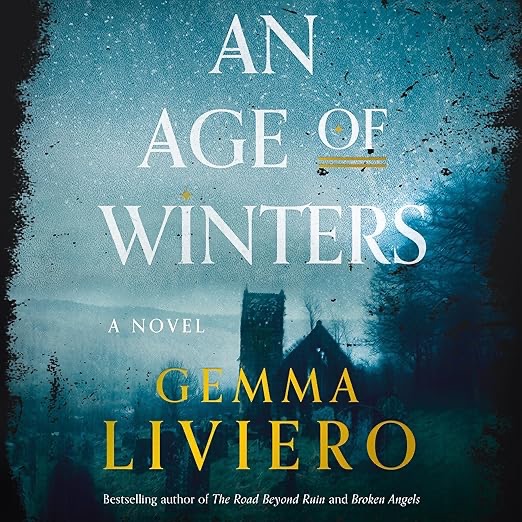
In the seventeenth century, witchfinders rule and paranoia thrives in a chilling novel about unrequited love, persecution, and betrayal by the bestselling author of The Road Beyond Ruin and Broken Angels.
In 1625, the Franconian village of Eisbach has been plagued by disease, famine, heinous crimes, and a merciless winter. Katarin Jaspers is the maidservant to the enigmatic Reverend Zacharias Engel, appointed by Rome to cure the village of suspected diabolism and save every God-fearing soul.
Zacharias soon finds his first witch, and the public burning of a local man could spell the end of misfortune. As a sense of peace settles over the village, Katarin finds herself increasingly infatuated with Zacharias, who is a disruption to her predictable existence and a balm for her cruel past. But peace for Katarin is short-lived. Margaretha Katz—the new midwife—is seen as a rival for the reverend’s attention. Fear and recrimination reach a fever pitch when a great tragedy sets the town fully on edge.
With the walls of winter closing in around Eisbach once again, rumours flourish and villagers turn on each other. Now, no one is safe from the pyre.
Review
In 1625, the Franconian village of Eisbach has been plagued by disease, famine, heinous crimes, and a merciless winter. Katarin Jaspers is the maidservant to the enigmatic Reverend Zacharias Engel, appointed by Rome to cure the village of suspected diabolism and save every God-fearing soul.
The Reverend Zacharias Engel is on a mission and no one is safe. He is determined to flush this village of the heretics and witches. Katarin, his maidservant, is on her best behavior. But will it be enough to keep her protected! Everyone in this village is turning against each other and no one knows whom to trust.
This is a 3.5 stars rounded up. There are quite a few minor characters to keep up with. Plus, the ending sort of went off the rails and did not fit. But, there is some great history and it has some dark elements which make it very intriguing in places.
This is narrated by Sarah Naughton and Alex Wyndham. I love a tag team of narrators but, for some reason, I was not a big fan of Alex. I just completely lost my focus during his part.
Need a tale of witch hunt for a change of pace…THIS IS IT! Grab your copy today.
I received this novel from the publisher for a honest review.
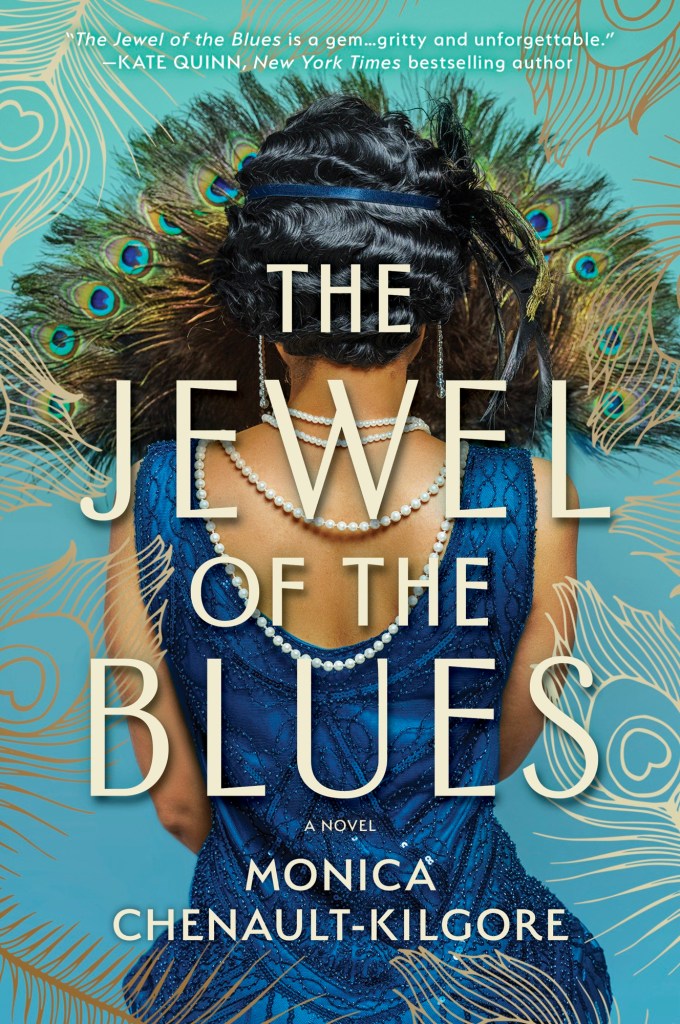
Set in the sparkling 1920s jazz era, The Jewel of the Blues pulls back the curtain on all the romance, danger and drama in the bustling backstage life of a young performer.
Billed as the Little Girl with the Big Voice, blues singer Lucille Arnetta Love always dreamed of life under the lights. From traveling family gospel band to lead singer in a riotous vaudeville troupe, Lucille is on the rise. But a devastating family secret, one that’s poised to shatter every dream she’s ever had, casts an inescapable shadow over Lucille’s career.
Decades ago, a botched robbery ended in a suspicious death—and all signs point to Lucille’s own father as the culprit. It’s a secret that Lucille’s family is determined to keep buried—even from Lucille herself. For a time, a fresh start feels possible, especially when Marcus Williams, Lucille’s manager—and sometimes paramour—sets her up with a band to tour the country: Miss Lucille’s Black Troubadours. Lucille’s dream of seeing her name in the bright lights of Broadway may happen yet, if she and the Troubadours can endure the highly competitive, rocky road to fame.
Beneath the dazzling glamour of the vaudeville scene lies a wicked underbelly, as drinking, gambling, salacious love affairs and racial tensions compete to dim Lucille’s shining star. And when shady figures from her father’s past emerge, their thirst for revenge threatens to silence Lucille’s career—and the sultry singer herself—for good.
About the Author
Monica Chenault-Kilgore was born and raised in Cincinnati, Ohio and currently lives in Edison, New Jersey. She is a graduate of The Ohio State University School of Journalism. Her published works include Liberty and Justice for All…Profiles of Middlesex County African American Veterans of WWII and the Korean War which is available in the public library. She formerly worked as a Contributing Reporter for The Home News Tribune and The Courier News newspapers.
Excerpt
Evansville, Indiana 1906
“Straaaw-ber-ries… Fresh pa-lumms… Suc-cu-lent fresh fruits and vegetables! Cuu-cumbers!” Hank Love swiped the back of his hand across his sweaty forehead before singing out the next verse. “Get your nice, plump straaaw-ber-ries here!”
Caught in the rapture of the heat and white streaks of baking sunlight, the sweet perfume rolled off the peaches, plums and strawberries. To get Caesar, his steadfast silent partner for the day, to take a couple steps forward, Hank patted the horse’s hind parts. Caesar bobbed his head in compliance and pulled the fruit cart deeper into the cooler alley and out of the sun. The handmade sign advertising Fresh Fruit and Produce posted at the alley’s entryway, along with the wafting fresh fragrance of the fruits and vegetables, would be enough to entice buyers to his makeshift stall. It wasn’t quite noon, and the city streets were filled. But, unfortunately, only a few passersby took the steps off the sidewalk to inspect Hank’s display.
Hank took a rag out of his pocket to wipe his forehead that was now peppered with beads of sweat. The heat wasn’t the only cause for Hank’s perspiration—it was also worry. He had to sell as much as he could today because he desperately needed money to pay for his tenancy. So far, it didn’t look promising. He had never missed a payment, but he couldn’t count on any leniency from the landlord—not here in Evansville, Indiana. The landlord made no bones about wanting him off the property that Hank and his family had worked for all the years they’d stomped their feet across the dirt. He, his wife, Evelyn, their baby girl, Lucille, as well as the rest of their blood and extended family that lived under the same roof, never lacked for food; they ate what they grew. But coming up with the money to keep the little family on the plot of land had become increasingly tough. Most times Hank was able to put aside his worry and leave it in God’s hands. Month after month, He never failed him. But this month was promising to be a test of faith because the money just wasn’t there.
Evansville had become a sundown town. There was a law on the books that colored folks had to be off the road before dusk or risk going to jail—or worse. So Hank needed to sell what he had while the sun was still in the sky, and in enough time to be home by sunset to avoid trouble. There had been racial skirmishes in nearby cities as of late. He, along with his neighbors, raised their voices to protest, but city leaders refused to hear their case. They also included the threat of coming to every Negro’s home within the city limits to discuss the law in detail. Despite the veiled intimidation, the protests continued. Until the law was overturned, Hank didn’t want to take any chances of being a victim of repercussions.
A stray black cat shot through the alleyway. Startled, both Hank and Caesar jumped. Then Hank froze in his tracks. Following the cat’s trajectory was the progressive padding sound of boots striking cobblestone coming from the street. Hank turned slowly, intending to chase off a random kid who sometimes tried to steal from him, but the sharp click of metal told him he needed to take a different course of action.
The top of his head went cold when he caught sight of a shotgun barrel pointed directly at him. At the other end of the gun were the steady gray eyes of a grimy white man leaning against the back of the wagon. Caesar danced from side to side from the unexpected weight of the stranger.
“Whoa boy,” Hank whispered as he gently patted the horse and kept his eyes on the shotgun. The horse’s muscles vibrated, and Hank could tell Caesar’s nervousness matched his own.
The man pushed away a bushel of cucumbers that went rolling across the ground. “Boy, you better do exactly what I say or today is gonna be your last day.” He hopped in the back of the wagon, kicking aside a box of peaches. A few tumbled over and their rose-colored bottoms hit the stones.
Caesar threw back his head, gave a deep-throated whinny and jerked the wagon forward.
The man wriggled his way between the boxes and bushels and lay down flat against the wagon bottom. From clenched teeth, the man squeezed out, “Now, let’s get going—and just ’member I’ve got this gun aimed right at the back of your head.”
Hank saw the man was bleeding. A growing red stain spread across the front of his jacket, but the man made no effort to conceal his wound. He kept both hands on his shotgun and held tightly to a large sack tucked under his arm. A piercing staccato of gunshots suddenly rang out from the main street and reverberated against the brick walls of the surrounding buildings. Hank whipped his head toward the entrance of the alley and saw the silhouettes of men in long coats with long guns and bags in their arms, whizzing past. In their wake was a chaotic commotion of gunfire, shattering glass and people screaming and shouting. Even from where he stood, Hank could see that the men who raced by looked just like the man who was now hidden from sight, wrapped around bushels and boxes of produce, tucked away in the back of his wagon.
Caesar suddenly bolted, grapevining his hooves from one side of the alley to the other, tugging on his reins with the intent of escaping the noise. The frightened horse lunged against his reins in every direction, and each time the wagon tipped from one side to the other, sending heads of lettuce and tomatoes flying to the ground. The wagon swayed deeply until it finally flipped over—along with its passenger—crashing against the cobblestones. Spooked even more, Caesar dragged the overturned wagon farther into the alleyway, which dead-ended into the back of another building.
Hank peered through the capsized wagon’s splintered planks. The man, buried in a rubble of produce, grunted and wheezed. “Get me out of here, nigga! Help me…”
Hank could see the man’s eyes rolling back into his head. The corner of a broken wagon slat was embedded squarely in the man’s chest. His pleas for help faded against a cloud of footsteps and the grinding sound of vehicles from the street. Hank looked up from the recesses of the alley to see people running in one direction—toward whatever happened—or seeming to chase the new motorized police wagon that had barreled past. Hank couldn’t imagine what possibly occurred to draw such a stream of curious people, but he knew his bleeding passenger had a hand in it.
Hank peeled back broken wood to try to free the man. It was then the sack that the man had held firmly pressed against his body caught Hank’s eye. It was partially hidden under pieces of fruit and splintered wood. He wasn’t sure what drove him to do it, but Hank slowly reached into the mass of rubble and tugged at the corner of the sack. It was heavy. When he received no resistance—an assurance that the man was dead or close to it—he yanked the bag to release it from between sharp edges of broken slats. Property of Second National Bank and Trust appeared across the bloodstained cloth. Hank looked toward the street. Still, no one came to his rescue or even seemed to notice him. He managed to stuff the sack under his arm inside his jacket. Watching the wagon for any movement, he moved slowly toward Caesar, who calmed at his touch but bucked to give the wagon a final hard kick.
A shotgun blast exploded from the wagon. Hank fell backward. A spray of splintered wood and pulpy fruit flesh splattered his face. Hank felt searing pain rip through his skin leaving a trail from his cheek to the top of his head. From that point, all Hank heard were the muted sounds of Caesar’s hooves stomping at the ground and screams coming from somewhere in the far distance. All he could see was a blur of purple, orange and red until it faded to black.
When Hank regained consciousness, searing pain shot from the top of his skull and a hot stream of blood stung his eyes. He winced as each of Caesar’s four legs hit the ground. He held his head, which felt like a heavy sack filled with cotton. He couldn’t recall how he unhitched and mounted the horse or when he left the remnants of his wagon along with the dead man in the alley. He couldn’t remember how he ended up on the silent road leading away from town. Although the road in front of him was a blur, he knew the horse would find his way back home.
***
When he could no longer focus, Hank let Caesar make his way down the roadway at his own pace, allowing the pain take over and send him back to unconsciousness. When he opened his eyes again, through a gauzy haze Hank saw the small white clapboard church he called home in front of him. He took a deep breath and fell against the horse’s neck, relieved. Through a peephole of light, Hank could barely make out a neat dirt path leading to a prim white two-story house with four windows. White sheets pinned to a clothesline whipped in the light breeze. He slid to the ground, leaning against the side of the building. Hank’s heavy limbs seemed plastered to the spot. The grass was cool and wet beneath him. The bag had fallen open and gold coins spilled out over his legs and the grass that he now saw was tinged red with blood.
His head rang with a hymn that climbed octaves, piercing through the bright blue sky. It was the beautiful soprano voice of his wife, Evelyn, accompanied on the piano by her father, Reverend John Pike. Her operatic high notes stung, or maybe it was the big black rowdy bees that were buzzing around the windowsill above his head.
Am I in heaven? Hank thought.
As if to answer his question, Hank patted the hard ground before digging his fingers into the earth. Pushing hard against the ground, he lifted his body, attempting to stand. He succeeded only a few inches until his knees gave way and he collapsed.
“Daddy!” A barefoot little girl ran up to him but stopped short a few feet away at the edge of the building. A rustling of skirts followed closely behind the child.
“Hank! Hank!” Evelyn knelt beside him, delicately touching his face to examine the extent of his injuries. “What happened, Hank? Where’s the wagon?” Jumbled thoughts spilled out in a collage of sentences. “I… I gotta go back… Evelyn, they be looking me…them fruit is gonna spoil… They’re gonna hang me for sure…”
“Hank, you’re talking gibberish. What’s all this?” Evelyn picked up the bag and a shower of coins fell to the ground. “Where did you get this money?” The little girl, sensing fear and confusion, started to cry.
Hank mumbled, “Is that my baby…my little angel? C’mere, Lucille.” He weakly waved his hand, motioning the child to come closer. “C’mon over and hug yo’ daddy.”
The child hesitated at first, but then bounced over, flung her body into her father’s lap and proceeded to pick up a handful of gold coins. “Daddy, are you hurt?”
Hank winced, gritted his teeth and sucked in his breath before responding in an even tone. “I’m all right, girl. I ain’t hurt.”
“Good. But what happened to you? You look hurt. Are you sure? I love you, Daddy.”
“Ah, now that’s the sweetest sound I’d ever wanted to hear.”
“Get out the way, Evelyn. Let me get this man to the house.” Reverend Pike rounded the corner. The reverend was a commanding figure both in stature and voice. When he spoke, anyone in earshot did exactly as they were instructed. Evelyn stepped aside.
Reverand Pike bellowed, “Can you stand, Hank?”
Evelyn instructed the child to go to the kitchen to help the cook. She then joined her father and wrapped Hank’s arm over her shoulder to help lift her husband up the stairs. They reached the stairs to the house, and Hank could no longer lift his leg. His head throbbed and his sight was fading.
***
Hank, having passed out again, awoke in a gray fog. Wrapped tightly in starched sheets and under a pile of quilts, Hank wrestled with the covers until he freed his arms and torso enough to sit up. He touched the damp, sticky, blood-spotted bandages that were wrapped around his head and half of his face. The slow-moving mechanism in his head ground gears trying to piece together the previous events. Through the haze of cotton gauze, Evelyn’s face came into view. Her knitted brows and lined forehead told him all he needed to know—that he must look like he was on death’s doorstep. Hank shifted his body, swiveled out from underneath the stiff sheets and blankets, but the pain held him locked in his spot on the bed.
“Don’t even try to move, Hank. Rest. You need to rest. We can talk about what happened later.” “Evie, wipe them frown lines from your face. Don’t worry. I’m all right.” He took a deep breath, puffed out his cheeks to blow away a wave of dizziness. “Ooo, it feels like you pulled a shade down over my eye. He hovered his hand over his left eye. “It feels like sharp knives are poking me in this eye, but I can still see pretty good out of this one.” He gently patted the right side of his face to lightly rub tears running from his good eye. “Yep, I can see my sweet angel.” He tried to give her a smile, hoping it would ease his wife’s fears. “How long have I been out?”
“Hank, you haven’t been laying here long at all. It’s only been about a half hour or so since we brought you in here and cleaned you up. Now, please lay still till we can get a doctor over here to have a look at you.”
“Ain’t gonna be no doctor. No need.” Grimacing, a thunderbolt of pain shot through Hank’s head and he plopped back against the headboard.
“How you doing, Hank?” The reverend’s deep voice cut through the conversation.
“I’m trying my best to keep him still, Father. Did you find anything out?”
Before answering his daughter, Reverend Pike leaned in close to whisper into Hank’s ear. “They gonna be looking for that money, Hank.”
Hank nodded feebly. “But they don’t know I have it. Wasn’t nobody in that alley but me, Caesar and a dead man that’s buried underneath the wagon.”
“That dead man was one of them bank robbers. Right before we found you, Zeke came running up here saying that the police are looking for three men who took all of Second National’s money. They shot up Main Street and killed some innocent folks as they escaped.”
Evelyn jumped in. “Robbers? Dead man? Hank, what have you gotten into?”
Hank stayed silent. Reverend Pike continued, “I don’t want anyone to pin nothing on you. In this town they’ll kill you. Just like that, no questions asked. For safekeeping, we’ll give that money to the freed spirits for now.”
The reverend was referring to a crawl space under the third pew where only decades before many a black family hid, lying flat on their backs until they were safe from slave owners who ventured north of the Mason-Dixon line in search of their escaped property.
“In the meanwhile, you and Evelyn can go visit her sister in Kentucky. Eliza Beth and Harper will take good care of all of you.”
Hank said softly, “No, Rev. I’m not going back that way.”
“Think about it Hank. You and Evelyn will be safer going down there than staying here.”
Hank held a hand to his head. “Evelyn, can you go get me some cool water, please? Rev, I need to talk to you for a minute.”
“Hank, there’s a pitcher of water right by your bed. There’s no need for me to leave.”
Hank grimaced as he squeezed out, “Woman, please.” Evelyn sniffed, turned and marched out of the room. As she retreated, Hank, having regained some of his strength, recounted the course of events that occurred downtown in the side alley.
Reverend Pike stayed silent, hovering over Hank as he listened. “Hank, you’ve always been such a determined man. I knew you would break down barriers to get what you wanted. That’s one of the reasons I allowed Evelyn to marry you, even though you didn’t have a penny in your pocket. Her mother, on the other hand, would’ve wanted her to marry into high society—God rest my sweet Delilah. But my Evelyn chose you to love, so I let her. I did that because I believed your ingenuity, devotion to hard work and to the Lord would keep my daughter living a comfortable and safe life.”
“Rev, I’m doing the best I can.”
When Evelyn returned with a new pitcher and a mason jar filled with water, she found the two men nodding their heads in agreement as if there was nothing left to do but execute a plan. A plan that started with packing up the wagon and heading south, and staying with relatives until things died down. The immediate flight would be framed as a trip to visit family and a mission to spread the gospel to the small churches along the trail.
Reverend Pike hugged his daughter and left the room, leaving the explanations to her husband. “You mean we’re running away? But you didn’t do anything. Why can’t we just return the money and explain to them how it came into your possession? You can say you found it, that is, if someone asks.”
“You know exactly why, Evelyn. This ain’t the time or place to think that them folks are going to be rational. Besides, no matter what happened, it will be an excuse for them to kick us off the property, endangering your father and the church we built here. I can’t put you and Lucille in danger like that.”
She quickly spit out, “Well, you already done that, haven’t you? I overheard something about a dead man, a bank robbery and…and just look at you! I don’t appreciate being kept in the dark. You and my father have got it all wrong, keeping things from me. I deserve to know—and have a say in what we do and where we go.”
After a beat, Evelyn began snatching up the family’s belongings, jamming them into suitcases and carpet bags. She marched from one side of the room to the other, turned and stomped to the dresser, then over to the closet. Her heels dug sharply into the wood floors as if intending to leave a mark. The swish of her apron, skirt and petticoats accented the staccato drumbeat of her steps. “Well, for how long, Hank? And why can’t we just take the train like civilized people?”
The reverend wanted them to take the train but Hank, being cautious, knew that the family traveling by train down south would make them an easy target to spot if someone just happened to be looking for them. The safest bet to go unseen would be by wagon. Reverend Pike reluctantly offered Jupiter, the dapple-gray workhorse, when Hank insisted Caesar stay behind.
“No time for that, Evie. Now get some things together so we can head down to your sister’s. We don’t need a lot, just a few things to tide us over for a few weeks.” He knew as he said it that he was lying.
“Why? What’s the rush? First, you need to see a doctor about your eye and that gash in your head. What about the farm? What about—”
Hank stopped her midsentence. “Enough with the questions! Get Lucille and let’s go. You got to trust me here, Evie.”
“I do, husband. I really do. I don’t want to argue. Before God and everyone who loves me, I said my vows to honor our marriage. I’ll go with you anywhere. But Hank, this has gone too far.”
Peering between strips of gauze, Hank watched the tall, robust woman he’d been married to for over ten years paced back and forth in front of him. She was taller than him, even when she was barefoot. From the view of the bed, she looked even taller. Like her father, she cut a commanding figure. The tight bindings of her apron could barely contain her. The thick, wavy hair piled on top of her head could hardly be restrained by her movements, and spindles of curls dropped around her face. The woman’s smooth walnut brown skin bore a tinge of red across her freckled cheeks. He knew it wouldn’t be easy, and he understood her anger, but he needed his wife to just go along with him. When she finally stopped pacing, a sure sign that the peak of her anger had passed, Hank dropped his head as if it was too heavy to carry.
Evelyn softened when she saw her husband’s hands pressed against the sides of his face. Still, not quite ready to give up the fight, she continued her protests. “But what about Father? He’s gonna be left here by himself. He’s not going to have a wagon, or a horse or anyone to help with the farm.”
“The church folk will take care of that. We’ll take Jupiter and leave Caesar so your daddy will have a plow horse. Rev will be okay. Going to your sister’s was your father’s idea anyway. I didn’t agree with him at first, but now I do…one hundred percent.”
She asked quizzically, “My father told you that we needed to go back down south? I can’t believe that. If it wasn’t for the church and my sister, Daddy said he would never go down south ever again. Besides, sis don’t even know that we’re coming.”
“She will soon. Your daddy will take care of that. He’ll get word to her in his own way. You know we know how to send messages faster than the government.”
Hank was now sitting up and pushing himself off the side of the bed. He stiffened and slowly turned his head from one side to the other, wobbling slightly as he adjusted to the darkness and heaviness on the left side of his head. Evelyn rushed to his side to help him stand but he brushed her off. “We’ll take the unpaved roads down to the river. We’ll rest a bit at the Quaker house, then take the ferry over to Kentucky. You know the route.”
“I haven’t been that way since I was a child. A whole lot of things have changed since then,” she grumbled.
“Evelyn, my dear wife, please just trust me,” Hank begged. “Both you and Lucille need to come with me. This is important. I’m doing this to keep you and Lucille safe. The Rev too, but I know hell will freeze before your daddy leaves this place. Someone is going to be coming soon. Maybe it’s the sheriff or some other crackers, but they’re going to be looking for me. They know money is missing and they know that one of the men who had a hand in taking it is dead in my wagon. They’re going to have a lot of questions and no matter how I answer them, they won’t be satisfied. I know it. You don’t want to know what they might do if they find me.”
Evelyn stopped. Her eyebrows rose and her large brown eyes widened. “If you’re so set on going and not telling me the whole story, then maybe you should go by yourself!”
“Evelyn, I got caught up in some bad action and I did something on impulse. You have to believe that what I did, I did for you and Lucille. On the way down to the Ohio River, I’ll explain everything. You’ll see why. We’ll come back after a while, and we’ll have everything we ever wanted after that.”
Deep down, Hank knew not a soul would believe the pieces of the story he could remember, but many would understand his motivation. Even his wife would be hard-pressed to believe he took part in a plan to break the law. Apart from his participation in the demonstrations about Evansville’s sundown laws, he had traveled a straight and narrow path to stay alive.
So when it came time for questions from his closest kin, the police and a group of county sons, Hank and his family were already gone.
Tis the season! The Crown meets When Harry Met Sally in the latest heartwarming historical novel from Hazel Gaynor and Heather Webb, bestselling authors of Last Christmas in Paris, Meet Me in Monaco, and Three Words for Goodbye.
December 1952. While the young Queen Elizabeth II finds her feet as the new monarch, she must also find the right words to continue the tradition of her late father’s Christmas Day radio broadcast. But even traditions must evolve with the times, and the queen faces a postwar Britain hungry for change.
As preparations begin for the royal Christmas at Sandringham House in Norfolk, old friends—Jack Devereux and Olive Carter—are unexpectedly reunited by the occasion. Olive, a single mother and aspiring reporter at the BBC, leaps at the opportunity to cover the holiday celebration, but even a chance encounter with the queen doesn’t go as planned and Olive wonders if she will ever be taken seriously.
Jack, a recently widowed chef, reluctantly takes up a new role in the royal kitchens at Sandringham. Lacking in purpose and direction, Jack has abandoned his dream to have his own restaurant, but his talents are soon noticed and while he might not believe in himself, others do, and a chance encounter with an old friend helps to reignite the spark of his passion and ambition.
As Jack and Olive’s paths continue to cross over the following five Christmases, they grow ever closer. Yet Olive carries the burden of a heavy secret that threatens to destroy everything.
Christmas Day, December 1957. As the nation eagerly awaits the Queen’s first televised Christmas speech, there is one final gift for the Christmas season to deliver…
Review
This story definitely takes you away to a unique time period with great characters. I loved Olive and Jack…add in Queen Elizabeth and Prince Phillip and I was hooked!
Olive is such a strong woman. She has made some mistakes and she knows what she must do, but life keeps getting in her way. Then there is Jack. He is a chef from New Orleans, LA. So, he has some ethnic challenges with his cooking for the royal family. This just adds a little “spice” to this story (pun intended!)
These two authors have created a heart warming story full of love, romance and some fascinating interactions!
Need an enjoyable, Christmas tale which gives you all the feels…THIS IS IT! Grab your copy today.
I received this novel from the publisher for a honest review.
#1 New York Times bestselling author Nora Roberts continues the hauntingly spectacular Lost Bride Trilogy with book two, The Mirror.
“If the audiobook version of a page-turner is being glued to your speakers, then Brittany Pressley’s narration of this slow-burn suspense will have listeners sitting in their cars long after they’ve parked in their driveways”—AudioFile on Inheritance
When Sonya MacTavish inherits the huge Victorian mansion on the coast of Maine, she has no idea that the house is haunted. The footsteps she hears at night, the doors slamming, the music playing, are not figments of her imagination. In her dreams she sees glimpses of the past. In the present she finds portraits of brides. And when she has visions of an antique mirror, she is drawn to it, sensing it holds dark family secrets.
Then one night the mirror appears and Sonya glides through this looking glass, into the past—and sees a bride murdered on her wedding day, the circle of gold torn from her finger. It is a scene that will play out again and again—a centuries-old curse that must be broken—and a puzzle she must solve if there is any hope of breaking the curse.
A Macmillan Audio production from St. Martin’s Press
Review
When Sonya MacTavish inherits the huge Victorian mansion on the coast of Maine, she has no idea that the house is haunted. The footsteps she hears at night, the doors slamming, the music playing, are not figments of her imagination. In her dreams she sees glimpses of the past. In the present she finds portraits of brides. And when she has visions of an antique mirror, she is drawn to it, sensing it holds dark family secrets.
These ghosts are a trip! I love the one that plays music when warranted. She comes up with some fitting songs for the situation. But the creepy one….she is a bit of a drama queen…and not a nice one either!
I have read the first book in the series, Inheritance and I loved it. I enjoyed this one as well. But, I think I liked the first one just a tad bit better. It is not necessary that you read these in order.
No one can weave a tale like Nora Roberts! And I love the way the she incorporates the past with the present. Very creative and intriguing.
The narrator, Brittany Pressley, is very distinctive in her voices. There are quite a few characters in this tale with all the ghosts and family. And she had a great voice for each one.
Need a unique ghost story…THIS IS IT! Grab your copy today.
I received this novel from the publisher for a honest review.
Taylor Jenkins Reid meets The Hundred Foot Wave in this dazzling new romance by USA Today bestselling author Sara Ackerman.
‘Iwa Young’s life is high in the Maui rainforest. As a field biologist, she’s happiest in company with trees and birds and waterfalls. When a developer arrives with plans for a so-called Eco Resort in the middle of a forest full of endangered species, ‘Iwa puts all her energy into the fight to protect it. But a chance encounter threatens to distract her. His name is Dane Parsons, and he’s a big wave surfer from California. ‘Iwa has a few unbreakable rules, and at the top of her list: Never Date A Surfer.
Dane Parsons is part of an underground group of big wave riders and his connection to the ocean runs deep. When he meets ‘Iwa he can’t get her out of his mind. But ‘Iwa wants nothing to do with Dane until he offers to help protect her beloved forest and waterfall. Always on the hunt for the ultimate ride, Dane suddenly glimpses something even greater, but just out of reach.
In this thunderous love story, we travel deep into the Maui rainforest and hop across the globe from Maui to Mavericks to Portugal, chasing waves the size of nine story buildings–where the unthinkable is always just one breath away.
Review
I have read all of Sara Ackerman’s books and The Uncharted Flight Of Olivia West is by far my favorite. As a matter of fact, I have loved most of her books. However, this one fell a bit short for me. I believe it is because I just had very little connection to the characters.
One character, Dane, is heavily into surfing and this is a major part of the story. The other character, ’Iwa, is into conservation of the Islands. All of this is great, it just didn’t interest me as much as some of this author’s other novels.
Dane and ’Iwa have a a typical, romance book relationship. He is the pursuer and she tends to put him off…that is until she cannot resist anymore. Then, as you guessed, their relationship falls apart. So, it is a bit predictable in the story line as well.
All of that being said…the setting of Maui is fantastic. And like I always say…read it for yourself.
Need a book with the fabulous setting of Hawaii…THIS IS IT! Grab your copy today.
I received this novel from the publisher for a honest review.
Author Bio:
Sara Ackerman is the Hawai’i born, bestselling author of historical & romance novels set in the islands. Her books have been labeled “unforgettable” by Apple Books, “empowering & deliciously visceral” by Book Riot, and New York Times bestselling authors Kate Quinn and Madeline Martin have praised Sara’s novels as “fresh and delightful” and “brilliantly written.” Amazon chose Radar Girls as a best book of the month, and ALA Booklist gave The Codebreaker’s Secret a starred review. Find out more about Sara and her books at http://www.ackermanbooks.com and follow her on Instagram @saraackermanbooks and on Facebook @ackermanbooks.

















 reecaspieces