In 1942, Hazel Francis left Wichita, Kansas, for California, determined to do her part for the war effort. At Douglas Aircraft, she became one of many “Rosie the Riveters,” helping construct bombers for the U. S. military. But now the war is over, men have returned to their factory jobs, and women like Hazel have been dismissed, expected to return home to become wives and mothers.
Unwilling to be forced into a traditional woman’s role in the Midwest, Hazel remains on the West Coast, and finds herself in the bohemian town of Laguna Beach. Desperate for work, she accepts a job as an assistant to famous artist Hanson Radcliff. Beloved by the locals for his contributions to the art scene and respected by the critics, Radcliff lives under the shadow of a decades old scandal that haunts him.
Working hard to stay on her cantankerous employer’s good side, Hazel becomes a valued member of the community. She never expected to fall in love with the rhythms of life in Laguna, nor did she expect to find a kindred spirit in Jimmy, the hotel bartender whose friendship promises something more. But Hazel still wants to work with airplanes—maybe even learn to fly one someday. Torn between pursuing her dream and the dream life she has been granted, she is unsure if giving herself over to Laguna is what her heart truly wants.
A Macmillan Audio production from St. Martin’s Press.
Review
Hazel has worked for Douglas Aircraft since she has left Kansas. Now that the war is over, she has lost her job. She takes a leap of faith and ends up in a town of Laguna Beach. She is going to be the assistant to a famous artist there, Hanson Radcliff. But, work for Hanson is a bit precarious. He is cantankerous and unpredictable and has a shadow of a scandal following him around.
Hazel is such a fabulous character and so is Hanson! I adored both. But, Hazel is my favorite. She is tough but naïve. And that is what makes her capture your heart. She really struggles to make a go with her new world and she is not afraid to learn or try new things.
I adored how this story unfolded. And don’t let Hanson fool you, he has great talent but he also has a big heart beneath that gruff exterior.
I have been a fan of this author every since I read The Show Girl. And this book rates right up there with it. This author knows how to weave a tale!
The narrator, Carlotta Brentan, is fantastic. She has the perfect tone for these characters, especially Hanson.
Need an all consuming tale…THIS IS IT! Grab your copy today.
“Disarmingly sensory, with plot twists that are sure to give readers whiplash, Garner has done a phenomenal job of giving us just enough information to think we know where the story is going, only to pull the rug out from under us—over and over again. A nail-bitingly spectacular debut!” —Amanda Jayatissa, author of You’re Invited
Finding the truth seems impossible when her own dark past has her seeing lies everywhere she looks…
From the outside, criminal psychiatrist Dr. Madeline Pine’s life appears picture-perfect–she has a beautiful family, a successful mental health practice and a growing reputation as an expert in female violence. But when she’s called to help investigate a mysterious death at a boarding school for troubled girls, Madeline hesitates. She’s been through tragic cases before, and the one she was entangled in last year nearly destroyed her…
Yet she can’t turn away when she hears about Charley Ridley. After the girl was found shoeless and in pajamas at the bottom of an icy ravine on campus, the police ruled it a tragic accident. But the private investigator hired by her mother has his doubts. And if it were Madeline’s daughter who died, she’d want to know why.
Arriving at the secluded campus in upstate New York, Madeline’s met by an unhelpful skeleton staff and the four other students still on campus during winter break. Each seems to hold a piece of the puzzle. And everyone has secrets–Madeline included. But who would kill to protect them?
Intertwining the narrative with the transcript of an anonymous interview, this stunning suspense debut from Katie Garner will take you on a twisting path where nothing–and no one–is what it seems.
Author Bio:
Katie Garner was born in New York and grew up in New Jersey. She has a degree in Art History from Ramapo College and is certified to teach high school Art. She hoards paperbacks, coffee mugs, and dog toys and can be seen holding at least one of those things most of the time. Katie lives in a New Jersey river town with her husband, baby boy, and shih-poo where she writes books about women and their dark, secret selves. The Night It Ended is her debut novel.
I’m speeding home when the phone rings, persistent and angry, demanding to be heard. I know I should answer it, even though I want nothing more than to throw it out the window. I could let the call slide into voice mail, delete it, never hear the voice on the other side.
But I can’t.
I jerk to the side of the icy road to a chorus of blaring horns, dig the phone out from the cavernous tote bag resting on the passenger seat beside me. The phone is sleek and black, brand-new—opposite of the cracked, chunky white one I’m used to shoving in my back pocket.
A sweet little chime and the ringing ends.
1 new voice mail.
Quickly, I glance in the side mirror. Car exhaust melts away into the morning winter sky. Nothing is behind me, nothing but air. I exhale a deep sigh of relief, press the phone to my ear.
“H-hi, this message is for Dr. Madeline Pine—”
A siren wails in the distance. The phone slips through my fingers, lands mutely in my lap. A knot swells in my throat. I glance in the side mirror again, feel my heart pound, each breath shrinking to tiny gasps. The sirens near. An emergency vehicle speeds past.
It’s only an ambulance.
My body wilts. I take a deep breath. In. Out. The knot in my throat loosens.
I hate the person I’ve become. I’ve never been this nervous, this afraid, anxiety and fear clinging to my every move. I wish I could escape—step into someone else’s life, if only for a moment.
Just twelve short months ago everything was different. I was different. Any other December, I would’ve been home, prepping for the holidays, shopping online for last-minute deals on things none of us needed. My husband, Dave, would be staying too late at work, his dinner wrapped in a blanket of aluminum foil, kept warm on the stove. My teenage daughter, Izzi, would be upstairs in her room, scrolling noiselessly through her phone, feet kicked up on the bed behind her.
The house would’ve hummed with the steady softness of disjointed home life, but instead here I am, lurched to the side of the road, the air frigid in the tiny cabin of my car, listening to a voice mail I never thought I’d hear.
I replay the message:
“H-hi, this message is for Dr. Madeline Pine. If you get this, I’m Matthew Reyes, a private investigator working on behalf of a family. Listen, I was hoping you could please call me back at this number, I—I’d really appreciate it. We have a sixteen-year-old female who died on school property. The police believe it’s an accident, but the mother hired me to be sure. The girl was found at the bottom of a hill. No witnesses. I thought you might be able to help—given your expertise. Please call me back. Thanks.”
I repeat his words in my head. The girl was found at the bottom of a hill—I can picture it, picture her. She’s there, fallen sideways, her body splashed across the woodland floor. Moss and stones, skin and blood, leaves and twigs. I don’t know her, but I don’t have to. I already feel as if she were mine.
The man who left the voice mail, Matthew Reyes, has a voice both gravelly and weary, and I know what he wants the moment he mentions the school. Police often believe they can demand anything they want and get it immediately—even psychological evaluations—but it takes time to gain trust from strangers, and even more time to tease out the truth. Especially from teenage girls.
I start weighing my options. I’m not sure I’m capable of this, of anything. Especially after last year…especially after what just happened in that too-hot office during this morning’s disastrous therapy session.
My face flushes at the memory of the woman who’d been sitting cross-legged in front of me. Her beautiful face. Her pink silk shirt blurring out of focus. Her condescending tone—as though the therapy sessions weren’t all for her benefit to begin with.
That’s what I have to remind myself. That’s what I have to hold on to. They’re for her. Not me. I’m the one who’s fine. I should be taking comfort in that, taking comfort in the fact that I never have to see her beautiful face again, never have to be reminded of—
It’s over. I didn’t have a choice before. Now I do. I have lots of choices. An avalanche of choices. My life before today was preprogrammed for me. Not anymore. I fixed it.
Tears slip down my cheeks. I bite them back, strangle the phone in my lap, squeeze it so tight I wonder how it fails to snap in two. Choices. Possibilities.
My mind whirls as I punch the gas, merge into traffic, race home. I run inside, slam the door, bolt the lock. Gazing around my gloom-infested house, I shrivel back as wind blows branches of a nearby tree, scraping the side of the house like fingernails.
Peering at the bulging paper bag of prescriptions on the kitchen island, my eyes prick with tears. My glasses fog. I take them off, rub the lenses clean on my turtleneck.
After so many months, the pills should be working. I should stop taking them altogether. Just throw them all in the toilet, flush them down, watch them whirl around the porcelain bowl.
I think of words my daughter, Izzi, said to me: Mom, please just stop.
Stop.
I don’t know the person I’ve become, too empty, too full, all at once. I need to change. I want to be different. Every day, I think of ways I can be. It can still happen. I’m free now. I have choices now, possibilities. Maybe it’s never too late to change everything. Maybe I just need to escape.
Besides, wiggle room is all it takes for a snake to get out of its skin.
The phone rings again. I snuff the urge to hurl it across the room before glancing at the screen. It’s the same number as before. The same number as the voice mail. I hold my breath and answer.
“Hello?”
“Hello—is this Dr. Madeline Pine?”
“Um—yes. It is.” My heart thuds. “Who’s this?”
A sigh of relief, deep and heavy, into the phone. “This is private investigator Matthew Reyes. Thank you so much for answering, Dr. Pine. I—I know it’s a chaotic time of year and you’re probably busy with family but…would you be able to make a trip up to Iron Hill?”
“I—I don’t know where that is.”
“It’s about two hours north of Poughkeepsie. Upstate New York.”
“Right, okay.” Far. Very far. Too far for my ailing car to make it. I know I should just buy a new one, but I can’t. My husband Dave always said the color perfectly matched my eyes. Now I can’t even remember the last time we looked at each other.
“So, are you busy this weekend?” Reyes asks, then pauses. “I mean, you’re sure you don’t mind ditching your family right before the holidays?”
“When you put it that way, it sounds horrible.” Awkward laugh. “But, um, my husband and daughter aren’t home now, anyway—they’ve gone away to visit my in-laws.”
“You have no idea how grateful I’d be if you could make it,” he says, sounding hopeful. I don’t know what he looks like, but I can imagine him smiling. “I mean, I’ve been calling around to different psychologists all day, and—well, it should only be for a couple of days. You’d definitely be back by Christmas, the latest.”
I wince, feel a surge of sorrow. I’m too embarrassed to admit that Dave and Izzi have no intention of spending the holidays with me this year. It’s what I deserve after what I did.
“I’m sorry,” I say, “please refresh my memory. Have we ever met? You said you’re a private investigator hired by the victim’s—er, the deceased’s—family?”
“Yes, I mean, we haven’t met, but I read about the work you did on the Strum case last year. I believe one of the victims was around the same age as our current victim. And I pulled up your book online—Dark Side: A Psychological Portrait of the Criminal Female Mind. You specialize in women. Just so happens the case is at an all-girls boarding school.”
My stomach clenches. Focus. Deep breath. I shift my gaze to the calendar hanging in the kitchen. I don’t even know why I bother to keep one anymore. I have the same schedule now, week in, week out. Before, the month of December would’ve been filled with holiday office parties, Izzi’s end-of-year school activities, Dave’s plans for winter break, which I’d always beg him to change.
I glance up. Friday, December 16. This morning’s therapy session slashes across my mind again. I see her face. Blank, empty. Her lips begin to curl around a word. I see myself in the reflection of her eyes. I’m close. Closer. I swallow hard.
“The, um, the students don’t go home for the holidays?” I ask, slumping down to the floor.
“Winter break is Saturday, the tenth to New Year’s. A few students stayed behind.” Reyes pauses. “The students who either couldn’t travel for various reasons or chose not to go home.”
I lean the back of my head against the wall.
Reyes continues. “The school is asking me to wrap up my investigation before students and staff return January 2.”
“Okay…”
He senses my discomfort, keeps talking. “Please. Please say yes. You mentioned you have a daughter. How would you feel if it were her?” he asks. “If she was found dead, you’d want closure, right? To be sure everything was done by the book and no stone was left unturned.”
My stomach flips. “Of course I would.”
“So, please. Please say you’ll help.”
I think of my daughter, Izzi, the lengths I’d go to if she was found at the bottom of a hill. Even if it was an accident, I’d want to know why. I’d want to know how she got there.
If she was alone. Afraid. Or if someone else was responsible. I’d want to know. I’d find them, I’d—
“I don’t know if I can do this,” I confess.
I shut my eyes, see her face again, legs crossed, sitting prim in that too-hot office, the heat blasting, the furniture too big for the tiny space. I tug at the neck of my sweater, suddenly tight, see my reflection in her eyes—close, so close.
No. Stop. I suck up a big breath, blow it all out.
“I don’t know if you’re aware, but after that case last year—” My voice cracks.
“The Strum case?” A note of curiosity in Reyes’s question.
“Yeah. Since then, things have been difficult. I ended up taking some time off—”
“I—I wasn’t aware. I’m sorry.”
“It’s fine. It just—it makes cases like this difficult.”
“Oh—”
“But before I say yes or no, can you give me an overview? What, exactly, I’ll be doing when I get there? I want to be sure I know what I’m stepping into.”
Reyes lets out a breath. “Yeah—yes, of course,” he says, a hint of desperation in his voice. “Well, it happened at a private, all-girls boarding school called Shadow Hunt Hall. They have a very small student body on a very large campus. It’s densely wooded and incredibly isolated. It’s one of those ‘back-to-nature, no technology on campus’ sort of places. The girls are mostly… I guess the best word for it is—troubled?”
“Isn’t that the best kind of girl?”
“Uh, here,” he says, ignoring my attempt at a joke. “I’ll send you some info.”
I glance at the screen, see he’s texted a link to the school’s website. I tap it open, swipe down the page. The school is ancient. Giant and stone, with iron gates and actual turrets, like a possessed fairy-tale castle. The curriculum looks interesting.
Definitely nontraditional. It’s all music and arts and dance. I skim the mission statement:
We believe in a holistic, individual approach to learning and rehabilitation, focusing on a curriculum centered on nature, group trust, and a healthy mind-body connection.
Code words for no junk food or internet.
Reyes waits patiently on the other end as I peruse the site. I click on the Tuition & Financial Aid page and flinch. A single term is more than twice the down payment we put on the house.
“You there? Dr. Pine?”
I lick my lips. “I’m here.”
He pauses. “I’m having trouble getting any of the students to even talk to me,” he admits. “That’s why I need you.”
I think of Izzi, chewing on her fingernails, avoiding eye contact when I ask how her day went. Ever since she started high school it’s been all one-word answers—good, fine—before she’d bound upstairs, not to be seen again until dinner.
So I can’t imagine how the girls at this boarding school would react to a male private investigator showing up out of nowhere, prodding them with questions right after their classmate died. No doubt they’d recoil, want nothing to do with him.
“The ending was pretty shocking and definitely not what I was expecting” —Novel Gossip
“Standing ovation for the brilliant Katie Garner! Captivating, ingenious, and absolutely audacious, this tour de force in structure and storytelling kept me turning the pages as fast as I could. Yes, The Night It Ended is a dark gothic murder investigation at a mysterious school for troubled girls—but don’t judge, don’t assume, don’t try to figure it out—just let Garner’s masterful sleight of hand carry you away through the gasp-worthy twists and turns. Do not miss this!” —Hank Phillippi Ryan, USA Today bestselling author of The House Guest
“A gorgeously atmospheric dark academic thriller set at a snowy boarding school so vividly rendered you can practically feel the frost freezing your blood. Garner centers female rage in the most delicious and page-turning of ways, plunging readers into a world where women’s machinations, conspiracies, anger, and even violence rule all. The Night It Ended is a twisty, frantically-paced story you’ll be desperate to devour all the way to the ice-cold ending.” —Ashley Winstead, author of The Last Housewife
“Set at an exclusive school for trouble teenaged girls, The Night It Ended by Katie Garner is dark, twisted, and utterly compelling. Impossible to put down, you won’t know who or what to believe and the creepy location will have you looking over your shoulder more than once. One heck of a debut with an ending that left me speechless.” —Hannah Mary McKinnon, internationally bestselling author of Never Coming Home
“Disarmingly sensory, with plot twists that are sure to give readers whiplash, Garner has done a phenomenal job of giving us just enough information to think we know where the story is going, only to pull the rug out from under us—over and over again. A nail-bitingly spectacular debut!” —Amanda Jayatissa, author of You’re Invited
“Wow. I loved this. Compulsively readable. I flew through it. Brilliant use of the unreliable narrator. I enjoyed the police interviews interwoven with the present-day mystery. It kept me on my toes. And that last plot twist…amazing. I did not see it coming.” –Amber Garza, author of When I Was You
“Katie Garner’s debut novel is a chilly, twisty ride—think dark academia meets Gillian Flynn. The Night It Ended is both a brooding Gothic mystery set at a boarding school for wayward girls and a jittery domestic thriller and just when you think you’ve got a handle on the story, Garner pulls the rug out from under you. I couldn’t put it down.”—Halley Sutton, author of The Lady Upstairs
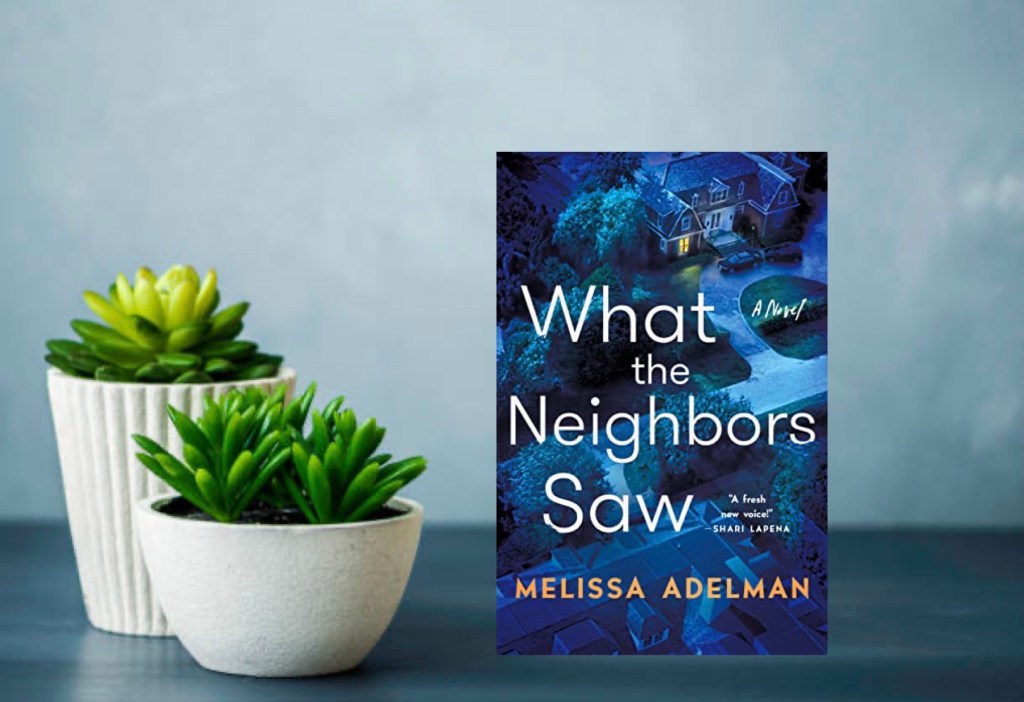
Desperate Housewives meets The Couple Next Door in a chilling story of murder and intrigue set in a well-to-do DC suburb.
Sometimes the darkest acts occur in the most beautiful houses…
When Alexis and her husband Sam buy a neglected Cape Cod house in an exclusive DC suburb, they are ecstatic. Sam is on the cusp of making partner at his law firm, Alexis is pregnant with their second child, and their glamorous neighbors welcome the couple with open arms. Things are looking up, and Alexis believes she can finally leave her troubled past behind.
But the neighborhood’s picture-perfect image is shattered when their neighbor Teddy – a handsome, successful father of three – is found dead on the steep banks of the Potomac River. The community is shaken, and as the police struggle to identify and apprehend the killer, tension in the neighborhood mounts and long-buried secrets start to emerge.
In the midst of the turmoil, Alexis takes comfort in her budding friendship with Teddy’s beautiful and charismatic widow, Blair. But as the women grow closer, the neighborhood only becomes more divided. And when the unthinkable truth behind Teddy’s murder is finally uncovered, both Blair and Alexis must reexamine their friendship and decide how far they are willing to go to preserve the lives they have so carefully constructed.
Review
Alexis and Sam have an opportunity to move into a very ritzy neighborhood. The house is probably out of their price range. Plus, this house needs so much work! They bite the bullet and move in. They really believe they are in a very safe area until one of their neighbors dies under questionable circumstances. Then, there are more strange things that begin to occur!
I really did not like any of these characters. Sam is verbally abusive to his wife, Alexis. Alexis is an attorney but she acts dumber than dirt. And she really makes so many very questionable decisions. Now, that that is out of the way, I did enjoy this story though!
This mystery is a bit intricate but the further you go along the more you are questioning…WHO DID IT! I figured out who did it but I had no idea why until the end and BOY…what a twisted ending! You will have to read this to find out. But…it is not what you think!
Need a murder mystery that has a family twist….THIS IS IT! Grab your copy today.
I received this novel from the publisher for a honest review.
Anyone who’s ever wanted to turn the page on their old life or felt the whispered promise of a new dream, and a fresh start will fall in love with Pamela Kelley’s charming new novel.” —New York Times bestselling author Mary Kay Andrews
TWO LIFELONG FRIENDS.
Jess loves her work as a high-profile lawyer in Charleston. But when her marriage implodes, she retreats to her childhood home on Cape Cod with her thirty-year-old daughter, Caitlin, hoping to regroup with her longtime best friend, Alison.
ONE BOOKSHOP BY THE BAY.
Alison’s career has taken a hit after twenty years as an editor for the magazine Cape Cod Living. But when she learns her beloved bookstore on the Cape is looking for new ownership, a new dream starts to form.
AND THE SUMMER THAT COULD CHANGE EVERYTHING.
As the two friends reopen the bookstore, they also open themselves up to the magic of second chances.
“A wonderful multigenerational story about mothers, daughters, and friendship set in a quaint seaside town on Cape Cod. If you love talk of bookstores, delicious food and coffee shops, this one is for you!” —Rachel Hanna, author of the South Carolina Sunsets series
A Macmillan Audio production from St. Martin’s Press.
Review
Jess’ world has just exploded. She is a well established lawyer in Charleston but her marriage has just blown up in her face. She heads to her home on Cape Cod to lick her wounds. She meets up with her friend, Alison. Well, needless to say, these two do not let grass grow under their feet. They end up buying a bookshop and their worlds change for the better.
These characters are such a refreshing change. I love Jess and Alison. Both have issues but they definitely overcome all that the world has stacked against them. Add in the setting and you have a great escape. Now, this tale is a bit long and could have been a bit shorter. In other words, there are several mundane details not needed. But the setting and the characters add to the charm!
The narrator, Stephanie Németh-Parker did such a wonderful job. She really made this tale come alive.
Need a sweet tale with a fabulous setting…THIS IS IT! Grab your copy today.
I received this novel from the publisher for a honest review.
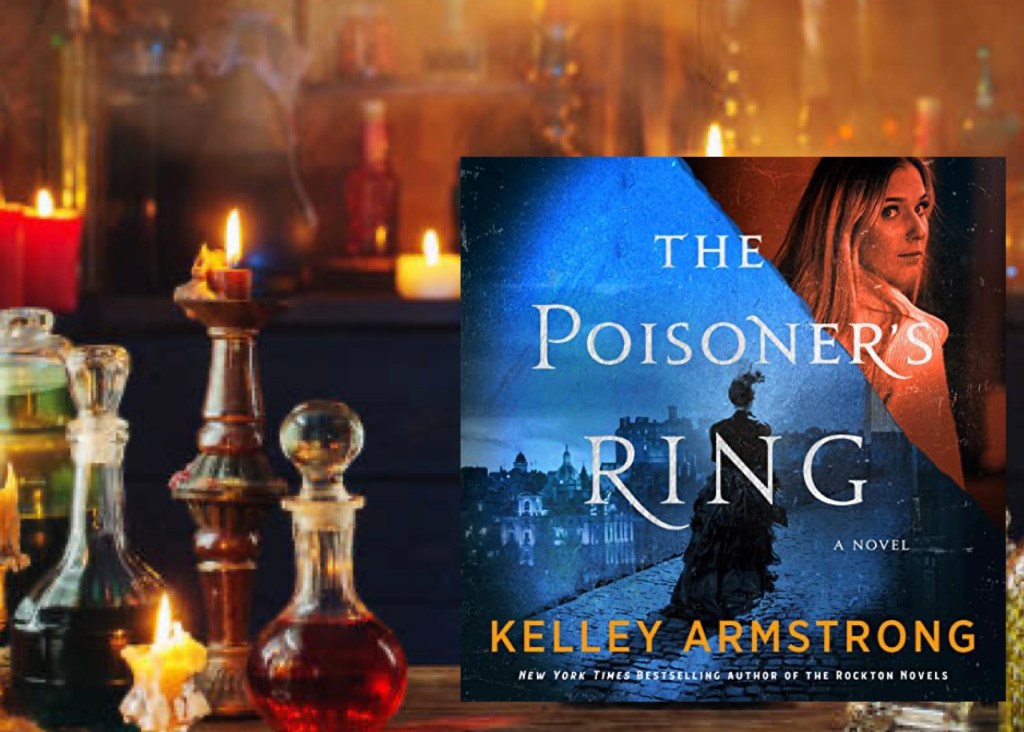
A modern-day homicide detective is working as an undertaker’s assistant in Victorian Scotland when a serial poisoner attacks the men of Edinburgh and leaves their widows under suspicion.
Edinburgh, 1869: Modern-day homicide detective Mallory Atkinson is adjusting to her new life in Victorian Scotland. Her employers know she’s not housemaid Catriona Mitchell—even though Mallory is in Catriona’s body—and Mallory is now officially an undertaker’s assistant. Dr. Duncan Gray moonlights as a medical examiner, and their latest case hits close to home. Men are dropping dead from a powerful poison, and all signs point to the grieving widows… the latest of which is Gray’s oldest sister.
Poison is said to be a woman’s weapon, though Mallory has to wonder if it’s as simple as that. But she must tread carefully. Every move the household makes is being watched, and who knows where the investigation will lead.
New York Times bestselling author Kelley Armstrong is known for her exquisite world building, and this latest series is no exception. The Poisoner’s Ring brings the intricacies of Victorian Scotland alive as Mallory again searches for a 19th-century killer as well as a way home.
Review
Mallory, is a modern-day detective in Victorian Scotland. Needless to say, this is a challenging change in her world. But, when she realizes someone is poisoning husbands and the wives are taking the fall, her police training comes out and she is on the hunt for a unique killer.
Since we went to Scotland in April, I am very much drawn to books set in this area of the world. This book is fabulous in that regard. The author brings Edinburgh to life in that time period. Old town and the closes (an alleyway to Americans) are spot on! I just loved this setting.
This story is a bit long but it is a very good historical mystery. I loved reading about what has changed since 1869 and what has stayed the same, like police procedures and the clothing. And these characters, especially Mallory, are fabulous. And don’t get me started on the twist at the end!
I have not read the first one of this series. I did not feel lost at all. So, this can be a stand alone. I will, however, try to go back and pick the first one up. I do want to know more!
Kate Handford is the narrator of this wonderful tale and she did a great job with all the voices. And perfect on all the drama.
Need a good time travel mystery…THIS IS IT! Grab your copy today.
I received this novel from the publisher for an honest opinion.
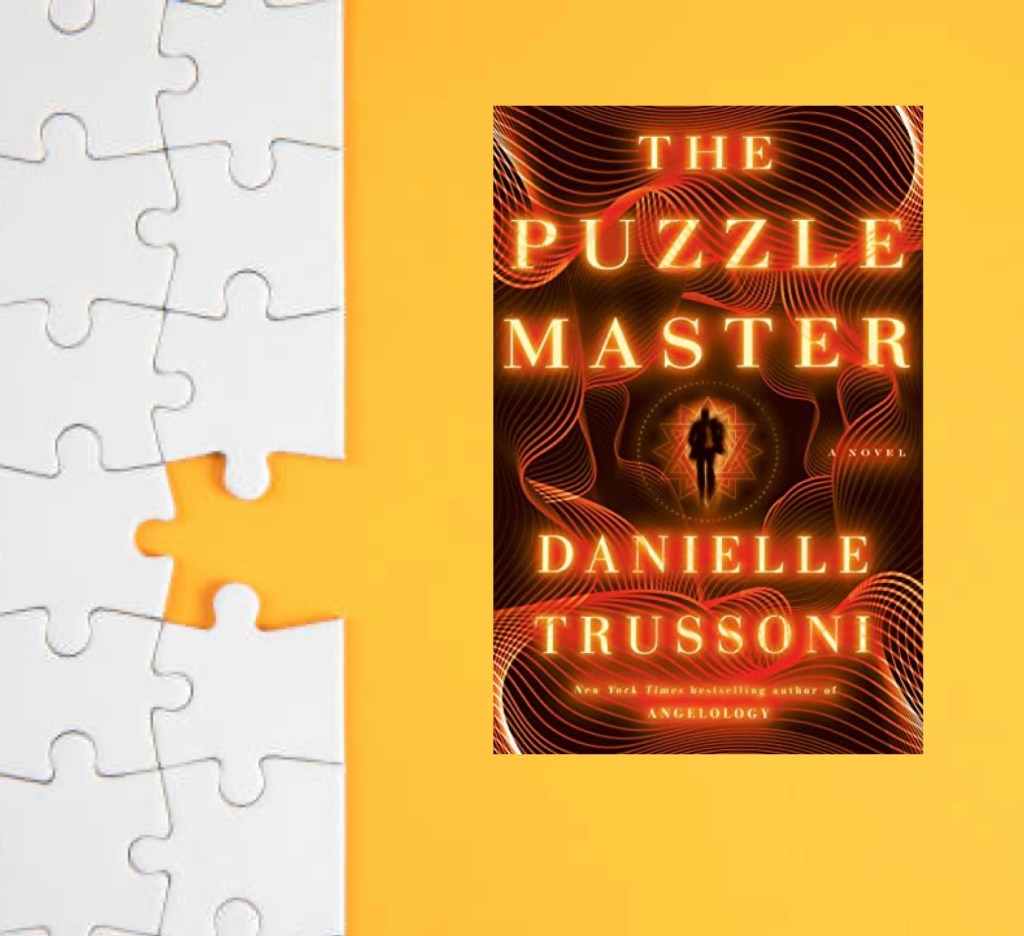
Reality and the supernatural collide when an expert puzzle maker is thrust into an ancient mystery—one with explosive consequences for the fate of humanity—in this suspenseful thriller from the New York Times bestselling author of Angelology
“In short: The Puzzle Master = (The Da Vinci Code + The Silent Patient + sprinkle of Stephen King) x gorgeous writing.”—Angie Kim, author of Miracle Creek
All the world is a puzzle, and Mike Brink—a celebrated and ingenious puzzle constructor—understands its patterns like no one else. Once a promising Midwestern football star, Brink was transformed by a traumatic brain injury that caused a rare medical condition: acquired savant syndrome. The injury left him with a mental superpower—he can solve puzzles in ways ordinary people can’t. But it also left him deeply isolated, unable to fully connect with other people.
Everything changes after Brink meets Jess Price, a woman serving thirty years in prison for murder who hasn’t spoken a word since her arrest five years before. When Price draws a perplexing puzzle, her psychiatrist believes it will explain her crime and calls Brink to solve it. What begins as a desire to crack an alluring cipher quickly morphs into an obsession with Price herself. She soon reveals that there is something more urgent, and more dangerous, behind her silence, thrusting Brink into a hunt for the truth.
The quest takes Brink through a series of interlocking enigmas, but the heart of the mystery is the God Puzzle, a cryptic ancient prayer circle created by the thirteenth-century Jewish mystic Abraham Abulafia. As Brink navigates a maze of clues, and his emotional entanglement with Price becomes more intense, he realizes that there are powerful forces at work that he cannot escape.
Ranging from an upstate New York women’s prison to nineteenth-century Prague to the secret rooms of the Pierpont Morgan Library, The Puzzle Master is a tantalizing, addictive thriller in which humankind, technology, and the future of the universe itself are at stake.
Review
Mike Brink received a head injury in high school. It changed his life drastically. He acquired a rare condition called savant syndrome. He now has a weird super power. He can solve any puzzle in seconds. This has left him strangely isolated from people. So, when he is called to a prison to meet a famous murderer, he is perplexed. Little does he know this will draw him into an ancient mystery with a maze of clues and his life at stake.
I love how this author weaves in religious or historical mysticism in her books and this one is one of her bests. Still not as good as Angelology, in my opinion, but is pretty dang close.
This is a fascinating tale with a unique race for time. I swear, I love a book which has me reading faster and faster to help the main character. And this book leads the reader on a fast paced chase with dire consequences. And an ending you won’t see coming!
Need a unique mystery…THIS IS IT! Grab your copy today.
I received this novel from the publisher for an honest review.
The latest historical novel from New York Times bestselling author Lisa See, inspired by the true story of a woman physician from 15th-century China—perfect for fans of See’s classic Snow Flower and the Secret Fan and The Island of Sea Women.
According to Confucius, “an educated woman is a worthless woman,” but Tan Yunxian—born into an elite family, yet haunted by death, separations, and loneliness—is being raised by her grandparents to be of use. Her grandmother is one of only a handful of female doctors in China, and she teaches Yunxian the pillars of Chinese medicine, the Four Examinations—looking, listening, touching, and asking—something a man can never do with a female patient.
From a young age, Yunxian learns about women’s illnesses, many of which relate to childbearing, alongside a young midwife-in-training, Meiling. The two girls find fast friendship and a mutual purpose—despite the prohibition that a doctor should never touch blood while a midwife comes in frequent contact with it—and they vow to be forever friends, sharing in each other’s joys and struggles. No mud, no lotus, they tell themselves: from adversity beauty can bloom.
But when Yunxian is sent into an arranged marriage, her mother-in-law forbids her from seeing Meiling and from helping the women and girls in the household. Yunxian is to act like a proper wife—embroider bound-foot slippers, pluck instruments, recite poetry, give birth to sons, and stay forever within the walls of the family compound, the Garden of Fragrant Delights.
How might a woman like Yunxian break free of these traditions, go on to treat women and girls from every level of society, and lead a life of such importance that many of her remedies are still used five centuries later? How might the power of friendship support or complicate these efforts? Lady Tan’s Circle of Women is a captivating story of women helping other women. It is also a triumphant reimagining of the life of a woman who was remarkable in the Ming dynasty and would be considered remarkable today.
Review
Yunxian’s mother has passed away. She is sent to live with her grandparents. She learns so much from her grandmother. But will it lead to her detriment? It very well could. And it does in some ways, but yet it saves her as well.
Yunxian is such an amazing lady. She is thrown into an arranged marriage. She has much knowledge about medicine but, as a woman in this time period, she is not supposed to be intelligent. She is supposed to be pretty, quiet, subservient and submissive. She falls short in a lot of these areas. But her intelligence on handling many situations saves her.
This book is amazing! The time period, the characters, and lord….the intensity in places. This book will give you so many feelings and you will have to process…so be ready!
The way things have changed but yet they have stayed the same!
Need a good all-around story to get lost in…THIS IS IT! Grab your copy today.
I received this novel from the publisher for an honest opinion.
A fascinating story of love’s ability to overcome family curses, scandals, and even war. Told in three parts, this multi-generational tale is wonderfully heartwarming!” —Madeline Martin, New York Times bestselling author of The Last Bookshop in London
Leedswick Castle has housed the Alnwick family in the English countryside for generations, despite a family curse determined to destroy their legacy and erase them from history.
1870. After a disastrous dinner at the Astor mansion forces her to flee New York in disgrace, socialite Beatrice Holbrook knows her performance in London must be a triumph. When she catches the eye of Charles Alnwick, one of the town’s most enviably titled bachelors, she prepares to attempt a social coup and become the future Marchioness of Northridge. Then tragedy and scandal strike the Alnwick family, and Beatrice must assume the role of a lifetime: that of her true, brave self.
1917. Artist Elena Hamilton arrives in Northumberland determined to transform a soldier’s wounds into something beautiful. Tobias Alnwick’s parents have commissioned a lifelike mask to help their son return to his former self after battle wounds partially destroyed his face. But Elena doesn’t see a man who needs fixing—she sees a man who needn’t hide. Yet secrets from their past threaten to chase away the peace they’ve found in each other and destroy the future they’re creating.
1945. Alec Alnwick returns home from the war haunted but determined to leave death and destruction behind. With the help of Brigitta Mayr, the brilliant young psychoanalyst whose correspondence was a lifeline during his time on the Western Front, he reconstructs his family’s large estate into a rehabilitation center for similarly wounded soldiers. Alec’s efforts may be the only chance to redeem his family legacy—and break the curse on the Alnwick name—once and for all.
Three beloved authors share stories of the Alnwick family through the generations, revealing how love and war can change a place—but only its people can unshackle it from the misdeeds of the past.
Review
Leedswick Castle in the English Countryside, has been home to the Alnwick family for generations. It is cursed! But this does not stop future generations from giving their all to overcome tragedy and adversity. And to give a little of themselves and the estate to help others.
This could almost be considered short stories. Each time period is separate, with different characters and different tales.
The first time period of 1870 is my favorite. I enjoyed Beatrice. But, that is not to say that 1917 is to be left out. I had no idea about masks that were made to help soldiers. These masks were to cover the injuries to the face and make it appear normal. Very interesting indeed! Then there is 1945. Alec definitely is shell shocked. But this does not stop him from helping others and possibly finding healing for himself.
The narrator, Ann Marie Gideon, is a great asset. She made all these time periods and characters separate and unique.
Need a tale about love and war with a wonderful estate as the backdrop…THIS IS IT! Grab your copy today.
I received this novel from the publisher for a honest review
As dawn breaks over the empty beaches of Portobello, Grace McKenna emerges from the icy water after her daily swim, her loyal dog Harvey by her side. Little does she know, in the shadows, a cold-blooded killer is plotting his next move…
Edinburgh, Scotland. After the toughest year of her life, Detective Grace McKenna is grateful for her job running the fledgling Portobello Detective Agency… though another client or two would certainly help keep the wolf from the door. So when the glamourous widow of renowned psychic Paul Gordon entreats her to investigate his suspicious death, Grace sees a unique opportunity to make a name for the agency.
Joining forces with Tobias Sloan—a dapper investigative reporter seeking answers about his wife’s tragic passing—their search takes a dark turn when the body of a beautiful young woman is found at a nearby elite golf club. The evidence leads them straight to Merchiston College of Psychic Studies—the very place where Paul Gordon met his grisly end.
Uncovering a shocking secret linking the two murders, Grace finds her professional and personal boundaries are beginning to blur. She is left to face not only the ghosts of her own past, but also the prospect of a hardened killer stalking the quiet lanes of Edinburgh. With time running out and the lives of her team hanging in the balance, can Grace McKenna solve the murders, and save herself from the same deadly fate?
A gripping Scottish mystery with a sprinkle of small-town charm, perfect for fans of Faith Martin, Clare Chase and Frances Evesham.
Review
Grace has left Edinburgh police force. She is now the proud owner of a struggling detective agency. She takes a shocking case. She hopes this will take her agency out of the red. But, it does more than that…it puts her and her team lives on the line.
I enjoyed Grace. She is definitely in a bad place in her life. And she struggles every day. But, she does pull through. She has lost her son and she blames herself. This makes her very vulnerable in this story, because she is surrounded by psychics. Psychics are not known for their truthfulness and, one especially, takes advantage of Grace’s vulnerability.
This story has a great many twists and turns and the setting of Edinburgh is wonderful. I loved hearing about Old Town and the Closes (street alleys to Americans.) But, it tends to ramble a bit, in my opinion.
The narrator, Samara MacLaren, is very good. She brought life to all the characters.
I received this novel from the publisher for a honest review.
For fans of fast-paced historical thrillers like Our Woman in Moscow and The Rose Code, Rimmer’s brilliant new novel follows three female SOE operatives as their lives intersect in occupied France, and the double agent who controls their fate.
Twenty-five years after the end of the war, an aging Marcel Augustin is reflecting on his life during those perilous, exhilarating years as a British SOE operative in occupied France—in particular the agent who saved his life during a mission gone wrong, whose real name he never knew, nor whether she survived the war. Piqued by her father’s memories, Marcel’s daughter Charlotte begins a search for answers that resurrects the unrest and uncertainty from that period of his life. What follows is the story of Eloise, Josie and Virginia, three otherwise ordinary, average women whose lives intersect in 1943 when they’re called up by the SOE for deployment in France. Taking enormous risks to support the allied troops with very little information or resources, the three women have no idea they’re at the mercy of a double agent within their ranks who’s causing chaos within the French circuits, whose efforts will affect the outcome of their lives.
As Charlotte’s search for answers continues, new suspicions are raised about the identity of the double agent, with unsettling clues pointing to her father, and more mysteries are unearthed from the last days of the war about the eventual fates of Eloise, Josie and Virginia.
ABOUT THE AUTHOR:
Kelly Rimmer is the worldwide, New York Times and USA TODAY bestselling author of The German Wife, The Warsaw Orphan, and The Things We Cannot Say. She lives in rural Australia with her husband, two children and fantastically naughty dogs, Sully and Basil. Her novels have been translated into more than twenty languages. Please visit her at www.Kelly.Rimmer.com
Perhaps at first glance, we might have looked like ordinary passengers: four women in civilian clothes, sitting in pairs facing one another, the private carriage of the passenger train illuminated by the golden light of a cloudless late-summer sunrise. Only upon closer inspection would a passerby have seen the handcuffs that secured us, our wrists resting at our sides, between us not because we meant to hide them but because we were exhausted, and they were too heavy to rest on our bony thighs. Only at a second glance would they have noticed the emaciated frames or the clothes that didn’t quite fit, or the scars and healing wounds each of us bore after months of torture and imprisonment.
I was handcuffed to a petite woman I knew first as Chloe, although in recent weeks, we had finally shared our real names with one another. It was entirely possible that she was the best friend I’d ever known—not that there was much competition for that title, given friendship had never come easy to me. Two British women, Mary and Wendy, sat opposite us. They had trained together, as Chloe and I had trained together, and like us, they had been “lucky enough” to recently find themselves imprisoned together too. Mary and Wendy appeared just as shell-shocked as Chloe and I were by the events of that morning.
As our captors had reminded us often since our arrests, we were plainclothes assassins and as such, not even entitled to the basic protections of the Geneva Convention. So why on earth had we been allowed the luxury of a shower that morning, and why had we been given clean civilian clothes to wear after months in the filthy outfits we’d been wearing since our capture? Why were they transporting us by passenger train, and in a luxurious private carriage, no less? This wasn’t my first time transferring between prisons since my capture. I knew from bitter personal experience that the usual travel arrangement was, at best, the crowded, stuffy back end of a covered truck or at worst, a putrid, overcrowded boxcar.
But this carriage was modern and spacious, comfortable and relaxed. The leather seats were soft beneath me and the air was clean and light in a way I’d forgotten air should be after months confined to filthy cells.
“This could be a good sign,” I whispered suddenly. Chloe eyed me warily, but my optimism was picking up steam now, and I turned to face her as I thought aloud. “I bet Baker Street has negotiated better conditions for us! Maybe this transfer is a step toward our release. Maybe that’s why…” I nodded toward our only companions in the carriage, seated on the other side of the aisle. “Maybe that’s why she’s here. Could it be that she’s been told to keep us safe and comfortable?”
Chloe and I had had little to do with the secretary at Karlsruhe Prison, but I had seen her in the hallway outside of our cell many times, always scurrying after the terrifyingly hostile warden. It made little sense for a secretary to accompany us on a transfer, but there she was, dressed in her typical tweed suit, her blond hair constrained in a thick bun at the back of her skull. The secretary sat facing against the direction of travel, opposite the two armed guards who earlier had marched me and Chloe onto the covered truck at the prison, then from the covered truck onto the platform to join the train. The men had not introduced themselves, but like all agents with the British Special Operations Executive, I’d spent weeks memorizing German uniforms and insignias. I knew at a glance that these were low-ranking Sicherheitsdienst officers—members of the SD. The Nazi intelligence agency.
The secretary spoke to the guards, her voice low but her tone playful. She held a suitcase on her lap, and she winked as she tapped it. The men both brightened, surprised smiles transforming their stern expressions, then she theatrically popped the suitcase lid to reveal a shockingly generous bounty of thick slices of sausages and chunks of cheese, a large loaf of sliced rye bread and…was that butter? The scent of the food flooded the carriage as the secretary and the guards used the suitcase as a table for their breakfast.
It was far too much food for three people but I knew they’d never share it with us. My stomach rumbled violently, but after months surviving on scant prison rations, I was desperate enough that I felt lucky to be in the mere presence of such a feast.
“I heard the announcement as we came onto the carriage— this train goes to Strasbourg, doesn’t it? Do you have any idea what’s waiting for us there? This is all a bit…” Wendy paused, gnawing her lip anxiously. “None of it makes sense. Why are they treating us so well?”
“This is the Strasbourg train,” Chloe confirmed cautiously. There was a subtle undertone to those words—something hesitant, concerned. I frowned, watching her closely, but just then the secretary leaned toward the aisle. She spoke to us in rapid German and pointed to the suitcase in her lap.
Had we done something wrong? More German words but it may as well have been Latin to me, because I spoke only French and English. Just then, the secretary huffed impatiently and pushed the suitcase onto the empty seat beside her as she stood. She held a plate toward me, and when I stared at it blankly, she waved impatiently toward Chloe and spoke again in German.
“What…”
“She wants you to take it,” Chloe translated for me, and I took the plate with my one free hand, bewildered. Chloe passed it to Wendy, and so on, until we all held plates in our hands. The secretary then passed us fat slices of sausage and cheese and several slices of bread each. Soon, our plates were filled with the food, each of us holding a meal likely more plentiful than we’d experienced since our arrival in France.
“She’s toying with us,” Mary whispered urgently. “She’ll take it back. She won’t let us eat it so don’t get your hopes up.”
I nodded subtly—I’d assumed the same. And so, I tried to ignore the treasure sitting right beneath my nose. I tried not to notice how garlicky and rich that sausage smelled, how creamy the cheese looked, or how the butter was so thick on the bread that it might also have been cheese. I told myself the increasing pangs in my stomach were just part of the torture and the smartest thing I could do was to ignore them altogether, but the longer I held the plate, the harder it was to refocus my mind on anything but the pain in my stomach and the feast in my hands that would bring instant and lasting relief.
When all the remaining food had been divided between us prisoners, the secretary waved impatiently toward the plates on our laps, then motioned toward her mouth.
“Eat!” she said, in impatient but heavily accented English.
Chloe and I exchanged shocked glances. Conditions in Karlsruhe Prison were not the worst we’d seen since our respective captures, but even so, we’d been hungry for so long. The starvation was worse for Chloe than me. She had a particularly sensitive constitution and ate a narrow range of foods in order to avoid gastric distress. Since our reunion at the prison, we’d developed a system of sharing our rations so she could avoid the foods which made her ill but even so, she remained so thin I had sometimes worried I’d wake up one morning to find she’d died in her sleep.
“What can you eat?” I asked her urgently.
She looked at our plates then blurted, “Sausage. I’ll eat the sausage.”
For the next ten minutes we prisoners fell into silence except for the occasional, muffled moan of pleasure and relief as we devoured the food. I was trying to find the perfect compromise between shoving it all into my mouth as fast as I could in case the secretary changed her mind and savoring every bite with the respect a meal like that commanded. By the time my plate was empty and my surroundings came back to me, the guards and the secretary were having a lovely time, laughing amongst themselves and chatting as if they didn’t have a care in the world.
For a long while, we prisoners traveled in silence, holding our plates on our laps at first, then after Wendy set the precedent, lifting them to our mouths to lick them clean. Still, the guards chatted and laughed and if I judged their tones correctly, even flirted with the secretary? It gradually dawned on me that they were paying us very little attention.
“How far is Strasbourg? Does anyone know?” I asked. Wendy and Mary shook their heads as they shrugged, but Chloe informed me it was hundreds of miles. Her shoulders had slumped again despite the gift of the food, and I nudged her gently and offered a soft smile. “We have a long journey ahead. Good. That means we have time for a pleasant chat while our bellies are full.”
By unspoken agreement, we didn’t discuss our work with the Special Operations Executive (SOE). It was obvious to me that each of the other women had been badly beaten at some point—Wendy was missing a front tooth, Mary held her left hand at an odd angle as if a fractured wrist had healed badly, and Chloe… God, even if she hadn’t explained to me already, I’d have known just looking at her that Chloe had been to hell and back. It seemed safe to assume we had all been interrogated literally almost to death at some point, but there was still too much at stake to risk giving away anything the Germans had not gleaned from us already. So instead of talking about our work or our peculiar circumstances on that train, we talked as though we weren’t wearing handcuffs. As though we weren’t on our way to, at the very best, some slightly less horrific form of imprisonment.
We acted as though we were two sets of friends on a casual jaunt through the countryside. We talked about interesting features outside our window—the lush green trees in the tall forests, the cultivated patches of farmland, the charming facades of cottages and apartments on the streets outside. Mary cooed over a group of adorable children walking to school, and Wendy talked about little shops we passed in the picturesque villages. Chloe shared longing descriptions of the foods she missed the most—fresh fruit and crisp vegetables, eggs cooked all manner of ways, herbs and spices and salt. I lamented my various aches and pains and soon everyone joined in and we talked as if we were elderly people reflecting on the cruelty of aging, not four twenty-somethings who had been viciously, repeatedly beaten by hateful men.
I felt the warmth of the sunshine on my face through the window of the carriage and closed my eyes, reveling in the simple pleasures of fresh air and warm skin and the company of the best friend I’d ever known. I even let myself think about the secretary and that picnic, and feel the relief that I was, for the first time in months, in the company of a stranger who had shown kindness toward me. I’d almost forgotten that was something people did for one another.
I’d never been an especially cheerful sort of woman and I’d never been an optimist, but those past months had forced me to stare long and hard at the worst aspects of the human condition and I’d come to accept a certain hopelessness even when it came to my own future. But on that train, bathed in early morning sunlight and basking in a full stomach and pleasant company, my spirits lifted until they soared toward something like hope.
For the first time in months, I even let myself dream that I’d survive to embrace my son Hughie again. Maybe, even after all I’d seen and done, the world could still be good. Maybe, even after everything, I could find reason to have faith.